Cookie Jam™ Match 3 Games
- 4.6
- Rating
- 50.00M
- Installs
- Free
- Price

 Analysis by App-foxy
I downloaded Cookie Jam™ Match 3 Games expecting a familiar match-three distraction, but I found a game with enough level variety to become a regular short-session habit. The basic idea is easy to understand: swap pieces, make matches, clear objectives, and work through increasingly demanding cookie-themed puzzles. What makes it worth discussing is not the first few minutes, which are immediately accessible, but how the game feels once you start treating it as a daily routine rather than a quick trial.
Developed by Jam City, Inc., this free puzzle game is aimed at a broad audience and carries an Everyone content rating. It has reached over 50 million installs, with a 4.6 average from around 1.2 million ratings and roughly 163 thousand written reviews. Those figures suggest a well-established audience, but popularity alone does not tell you whether the design suits your patience, spending habits, or preferred style of puzzle.
My experience was strongest when I played in short bursts. A few levels fit naturally into a break, while longer sessions made the repeated pattern of planning, retrying, and occasionally waiting for progress to settle feel more noticeable. If you enjoy colorful match-three boards and gradual challenge, there is plenty here. If you want a completely quiet, offline-feeling puzzle with no pressure around progression, you may find the surrounding game structure less comfortable than a minimalist alternative.
You May Also Like

 Blood Strike: 2.5 Anniversary
Blood Strike’s Loadouts Turn Every Drop Into a Tactical Gamble
A close look at Blood Strike’s custom loadouts: how fast access to signature weapons reshapes its battle royale rhythm, rewards preparation, and narrows the gap between fights.

 Pandora - Music & Podcasts
Pandora’s Music Is Easy to Start, but Harder to Recover
Pandora’s strength is its low-effort path from a seed to a station. Its weak spot is how much confidence it asks you to place in connection, setup, and quiet recovery.

 8 Ball Pool
 Is Built on Rivalries, Rematches, and Routine
A close look at the rivalries, rematches, shared routines, and unanswered safety questions that turn a quick pool match into a persistent mobile community.

 Samsung Music
’s Quiet Strength Is Playing What You Already Own
Its reach comes less from spectacle than from dependable access to a personal library. That simplicity is both the app’s strongest retention engine and its ceiling.

 AccuWeather: Weather Radar
AccuWeather Review: A Quick, Clear Forecast for Everyday Decisions
For everyday plans, the best forecast is the one you can understand quickly. AccuWeather makes rain timing, radar, and local conditions easy to act on, with a few trade-offs.

 Hill Climb Racing
Why Hill Climb Racing Still Turns Crashes Into One More Run
A tiny car, a bumpy hill and one more upgrade: Hill Climb Racing keeps resurfacing because its simple chaos makes every near-miss feel personal.
More From Our News Desk



Where players usually get stuck
The first obstacle is not learning how to make a match. The opening boards teach that quickly. The real adjustment comes when a level stops rewarding the obvious move. I had to look beyond the largest immediate match and think about what the board would look like after pieces fell into place. A move that clears several items can still be poor if it removes the chance to create a more useful combination on the next turn.
This is especially important in levels with a specific objective. Clearing pieces for its own sake is not always enough; the board may require attention to particular obstacles or targets. I found it helpful to pause before every move and ask what the level is actually asking me to finish. That small habit prevents a common mistake: spending early moves on attractive combinations that do not advance the objective.
Another sticking point is the transition from relaxed play to constrained play. Early puzzles can make the game feel almost automatic, but later boards demand more careful timing. When the available moves are limited, a random swipe can leave the remaining pieces in an awkward arrangement. I recommend scanning the entire board before touching it, especially near the bottom, where a move can trigger a chain reaction and change the options above.
Players also get stuck when they treat every failed attempt as evidence that the level is impossible. In my experience, a failed board often reveals the useful information: which area becomes blocked, which target takes longest to clear, or which side of the board needs attention first. Instead of repeating the same opening move, I used the next attempt to change one decision and watch the result. That makes retries feel like problem-solving rather than pure luck.
The most useful practical insight is to play for the level objective, not for the biggest-looking match. A modest move that opens a blocked section can be more valuable than a larger-looking clear elsewhere. This is a simple distinction, but it becomes increasingly important as the puzzles ask for more deliberate board management.
Why the cookie theme helps, and where it does not
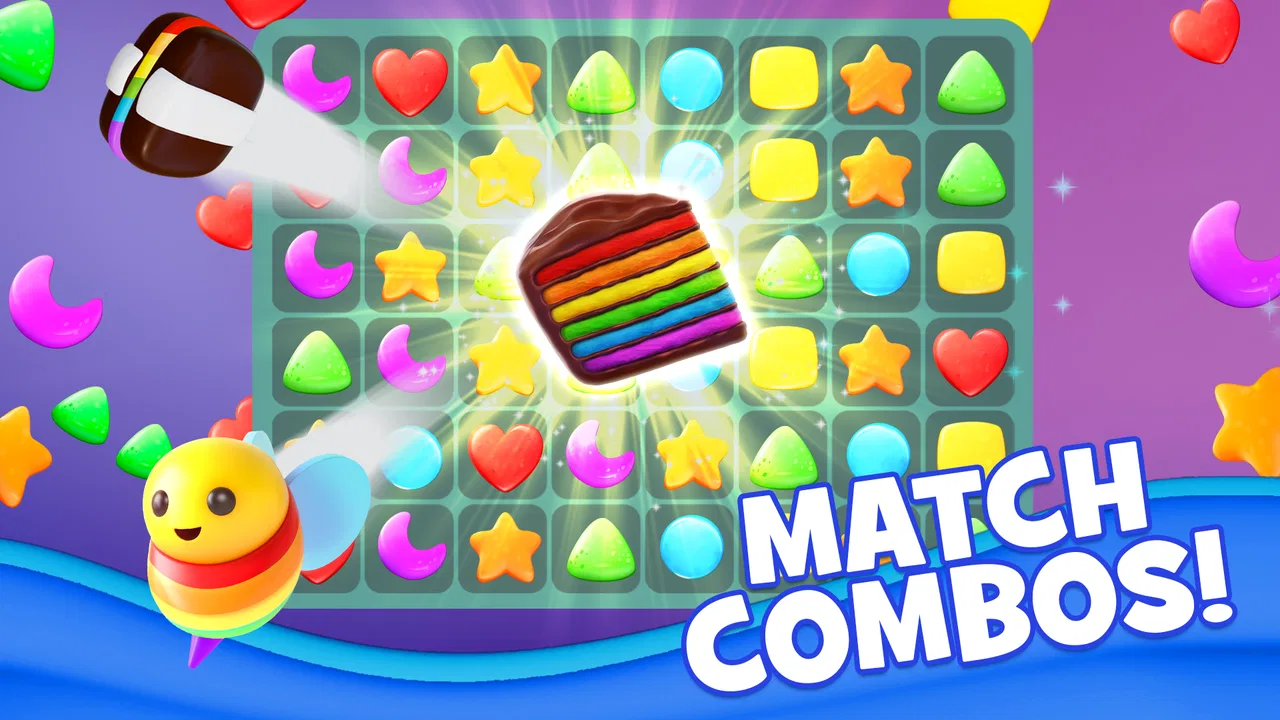
The dessert presentation gives the game a friendly personality. It makes a familiar puzzle format feel lighter than a serious strategy title, and the visual language is easy to read at a glance. That matters on a phone, because I can understand the board quickly without studying tiny symbols or complicated menus.
At the same time, the sweet presentation should not make you assume that every level is casual. The surface is cheerful, but the later decision-making can be surprisingly demanding. I would describe it as approachable rather than effortless. Someone looking for a gentle game to introduce to a child may appreciate the Everyone rating, while an adult expecting only mindless swiping may be surprised when the board begins punishing careless choices.
Setup checks before blaming the game
The game is free to install, and the listed minimum operating-system requirement is Android 7.0 or newer. That makes it accessible to many Android users, but compatibility is not the same as a guaranteed smooth experience on every device. Before judging performance, I would check that the phone has enough free storage, that the operating system is current enough for the installation, and that other demanding apps are closed.
On iOS or Android, the first launch is a good moment to notice whether the game behaves normally before changing several settings at once. Let the initial screens finish, avoid repeatedly tapping while a page is loading, and make sure the device has a stable connection if the game needs to communicate with its service. These are ordinary checks, but they help separate a temporary setup problem from a genuine issue with the app.
The current version is 18.0.114, so I would also check whether the installed build is current before troubleshooting further. An older build can behave differently from the version intended for the present operating system. If an update is available, installing it through the normal app store is a sensible first step. I would restart the device afterward rather than immediately opening several other games and assuming the result is representative.
One practical point is to avoid beginning a long session when the phone is nearly full or running hot. Puzzle games may look simple, but any app can become less responsive when the device is under storage or thermal pressure. If taps seem delayed, the board stutters, or transitions take unusually long, I would close background apps, let the phone cool, and try again before deleting anything.
People often ask whether the game costs money to start. It is free, but it includes optional in-app purchases priced from $0.49 to $299.99 per item. I consider that an important setup check for families: review the device’s purchase controls before handing the phone to a child, and decide in advance whether you want to spend anything. The game is much easier to enjoy when a failed level does not turn into an impulsive purchase decision.
The broad age rating makes the game approachable, but it does not remove the need for sensible device settings. I would treat the rating as guidance about content, not as a replacement for purchase supervision. That distinction is particularly useful if the phone is shared or if a younger player is using an account connected to a payment method.
A better first-session routine
My preferred setup routine is simple. I first play several levels without spending anything, learn how objectives are presented, and notice whether the controls feel comfortable on the device. Then I decide whether the game fits my normal session length. This is better than making a purchase early, because the main question is not whether a single level is fun; it is whether the overall rhythm suits you.
I also recommend keeping the first session focused. Do not try to evaluate every menu or rush through the opening just to reach harder content. Pay attention to how clearly the board communicates its goals and how you feel after a failed attempt. Those details tell you more about long-term fit than the bright visuals do.
If the game appears stuck during installation, the safest general sequence is to confirm the connection, check available storage, restart the device, and try the official store update or installation process again. If the problem appears only after launch, close the app normally and reopen it. I would avoid repeatedly clearing data or uninstalling immediately, because aggressive troubleshooting can remove local progress or settings.
Recovering your workflow after a failed level or interruption
When I lose a level, I try not to restart with the same mental plan. I identify the first point where the board became difficult and change the order of my priorities. For example, if the lower area became crowded, I focus earlier moves there. If the objective remained untouched while I chased ordinary matches, I make the target the center of the next attempt.
This approach is useful because match-three boards combine planning with unpredictable piece movement. You cannot control every result, but you can control where you begin, which area you open, and whether you spend a move on progress or decoration. The trade-off is that patience matters more than speed. Players who prefer immediate, fully predictable solutions may find this style less satisfying than a logic puzzle with fixed layouts.
A realistic everyday use case is a short commute break or a few minutes while waiting for an appointment. I would play one or two levels, stop before becoming frustrated, and return later with a fresh view of the board. That rhythm works better for me than trying to force progress through a difficult section in one sitting. The game’s strongest quality is its suitability for small pockets of time, not necessarily for an uninterrupted evening.
If an interruption occurs, reopen the game calmly and check what the board shows before tapping rapidly. When a puzzle has been left in the middle of an action, impatient input can make it harder to understand whether the game is still processing or simply waiting for the next move. Give the screen a moment, then continue with deliberate taps. If the app repeatedly closes, restart the device and check for an update before attempting more complicated fixes.
I would be cautious about uninstalling the game as a first response to a crash or loading problem. Removing an app may affect locally stored progress, depending on how the device and game handle saved information. A safer order is to restart, update, check storage and connection, and only then consider reinstalling after making sure you understand what might happen to progress.
There is also a useful spending workflow. I never treat a failed attempt as a reason to buy something immediately. I leave the level, take a break, and return later. This separates a genuine desire to continue playing from the frustration of being blocked. For a free game with optional purchases, that pause is one of the best ways to keep the experience under your control.
How it compares with familiar alternatives
Compared with a minimalist match-three game, Cookie Jam offers a more decorated and progression-focused experience. The cookie theme gives it more personality than a plain grid, and the large collection of levels provides a reason to keep returning. The downside is that a richer structure can also bring more opportunities for friction, especially for someone who wants to open a puzzle, solve it, and leave without thinking about longer-term progress.
Compared with a pure logic puzzle, it is less predictable. You are not always working through a single clean deduction; board movement and available matches influence the outcome. That makes the game more relaxing for some players and more irritating for others. I would choose this title when I want visual feedback and quick decisions, but I would choose a non-match puzzle when I want a fully controlled challenge with one definite route to the answer.
It also differs from competitive puzzle games because my enjoyment did not depend on comparing a score with another person. The appeal is personal progression through the levels and improving how I approach difficult boards. If your main motivation is direct competition, leaderboards, or a highly strategic head-to-head format, another category may serve you better.
One non-obvious trade-off is that the game rewards learning the board’s priorities more than developing a single favorite move. In some match-three titles, players can rely heavily on chasing large combinations. Here, I found that habit unreliable. A smaller, well-placed clear can preserve future options, while a flashy move can leave the objective untouched. That gives the game more depth than its casual appearance suggests, but it also means the easiest-looking strategy is not always the most effective.
When the app is not the cause
Not every problem that appears while playing comes from the game itself. A weak or changing connection can affect loading, and a phone with very little free space can behave unpredictably across many apps. If other games or streaming services are also slow, I would investigate the device or network first rather than assuming this particular title is responsible.
Battery-saving modes can also change how an app behaves in the background. If the game reloads after you switch briefly to another app, check whether the phone is aggressively limiting background activity. I would not disable important device protections casually, but I would compare the behavior with normal battery settings and a freshly restarted phone. This kind of comparison is more informative than changing several permissions or system options at once.
Touch problems deserve the same caution. If a tap does not register, test whether the rest of the screen responds normally and whether the issue happens in another app. A dirty screen, a thick protector, or a device-level touch problem can look like a game control failure. Cleaning the display and trying a different part of the board can help identify whether the issue is local to one area or broader.
For purchase-related confusion, I would first check the device account and purchase history rather than tapping repeatedly. If a transaction appears delayed, repeated attempts can create more uncertainty. Keep the store receipt and use the platform’s normal support route for account or billing questions. The important distinction is that gameplay troubleshooting and payment troubleshooting are separate tasks.
Players should also remember that a difficult level is not automatically a technical fault. If the board responds to moves, animations complete, and the objective updates correctly, the challenge is probably working as designed even when the result feels unfair. I found it more productive to change my opening plan, take a break, and retry than to reinstall after every loss.
My practical verdict after regular play
I recommend Cookie Jam™ Match 3 Games to anyone who likes approachable match-three puzzles but wants a substantial journey rather than a tiny collection of boards. Its free entry point, Everyone rating, and familiar controls make it easy to try. The dessert theme is inviting, and the game becomes more interesting when you stop chasing random large matches and start planning around the actual objective.
My recommendation comes with conditions. I would skip it if you dislike optional purchases, feel pressured by progression systems, or want a puzzle experience with no chance of becoming repetitive. I would also look elsewhere if your phone is older, nearly full, or already struggles with other games. A simpler puzzle app may be a better fit for someone who values instant loading and a completely stripped-down interface.
For everyone else, the best way to approach it is to set a personal boundary before playing: decide whether you will spend, choose a reasonable session length, and treat difficult levels as experiments rather than emergencies. Check the operating system and storage before installation, keep the app updated, and use basic restart and connection checks before attempting a reinstall.
What stayed with me was the balance between friendly presentation and increasingly careful decision-making. The game is easy to pick up, but it rewards players who study the board, protect future moves, and focus on the level’s real target. That combination makes it more satisfying than a purely automatic swiping game, even though it will not suit every mood.
Jam City, Inc. has built a puzzle game that works best as a flexible companion for short breaks. I would not call every level equally fresh, and the optional purchase range means families should configure spending controls thoughtfully. Still, if you want a free, cookie-themed match-three game with a long progression path and enough tactical friction to keep the boards from feeling completely mindless, this is a solid choice. Play patiently, troubleshoot the device before blaming the board, and you will get a much fairer impression of what it does well.
FAQs for Cookie Jam™ Match 3 Games
01What is Cookie Jam™ Match 3 Games?
Cookie Jam™ Match 3 Games is a delightful puzzle game where players match colorful cookies to solve levels. With thousands of levels and frequent updates, it offers endless fun and challenges. Players navigate through different themes and environments, making it a visually appealing experience.
02Is Cookie Jam™ free to play?
Yes, Cookie Jam™ is free to download and play on both Android and iOS devices. However, it offers in-app purchases for players who wish to enhance their gaming experience with additional moves, power-ups, or to remove ads. Purchases are optional and not required to enjoy the game.
03What are the main features of Cookie Jam™?
Cookie Jam™ features thousands of levels, each with unique challenges and goals. It includes daily events, tournaments, and special missions to keep the gameplay exciting. The game also offers power-ups and boosters to help players clear difficult levels and enjoy a more dynamic puzzle-solving experience.
04How does Cookie Jam™ ensure player progress is saved?
Cookie Jam™ offers the option to connect the game to your Facebook account, allowing your progress to be saved and synchronized across devices. This way, you can switch between your phone and tablet without losing your place in the game, ensuring a seamless gaming experience.
05Are there any social features in Cookie Jam™?
Yes, Cookie Jam™ includes social features that allow players to connect with friends, send and receive lives, and compete on leaderboards. Players can also participate in team events, adding a cooperative element to the game where they can work together to achieve common goals.
Pros
- Colorful and engaging graphics.
- Regular updates with new levels.
- User-friendly interface.
- Fun events and challenges.
- Connects with Facebook for social play.
Cons
- In-app purchases can get pricey.
- Requires internet connection.
- Ads can be intrusive.
- Some levels are very difficult.
- Battery drain on older devices.

Cookie Jam™ Match 3 Games
Gallery